
Men Mind Today: Breaking the Silence Through Physical and Mental Wellness
HSS (UK) Explores Men’s Mental Health Through Physical Fitness and Self-Development
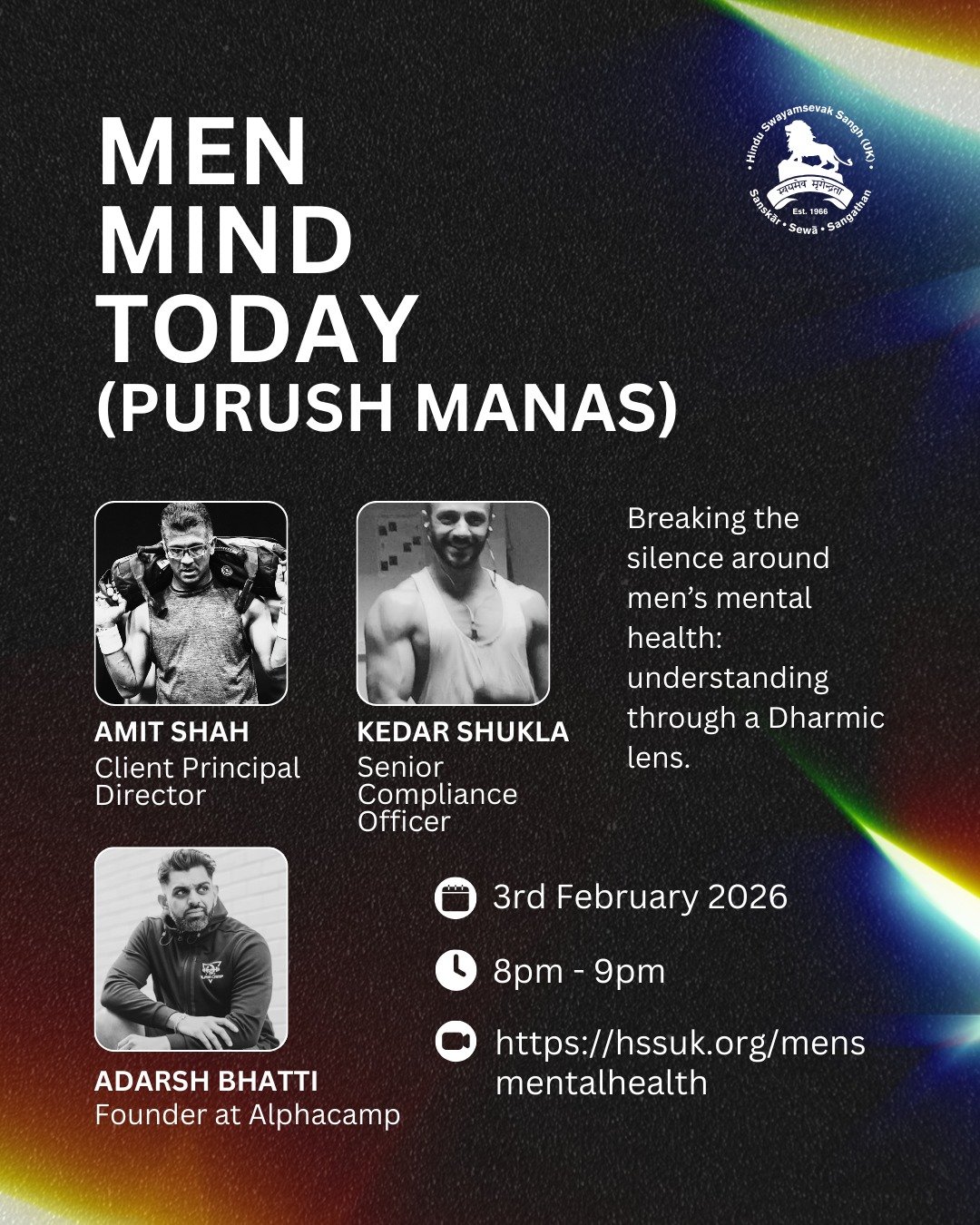
On 3rd February 2026, Hindu Swayamsevak Sangh (UK), commonly known as HSS (UK), hosted the fourth instalment of its “Men Mind Today” podcast series, exploring the relationship between physical fitness, mental wellbeing, personal discipline, and resilience.
Hindu Swayamsevak Sangh (UK) is a voluntary cultural and community organisation that promotes personal development, community service, family wellbeing, and active citizenship across the United Kingdom. Its activities are informed by Hindu and Indian cultural traditions, including an emphasis on developing a balanced and responsible individual who can contribute positively to family and society.
The “Men Mind Today” series was established to encourage open and constructive conversations about men’s mental health. The initiative aims to create a space where men can discuss personal challenges, wellbeing, resilience, and healthy approaches to managing the pressures of modern life.
The fourth episode brought together three speakers who shared their personal experiences of using physical activity, discipline, and self-development as tools for building resilience.
The online discussion featured Amit Shah, a Client Principal Director from North London, and Kedar Shukla, a Senior Compliance Officer from South London. Both have been involved with HSS (UK) since childhood and brought perspectives shaped by years of engagement with Hindu and Indian cultural values. They were joined by Adarsh Bhatti, founder of Alphacamp and a personal fitness coach, who contributed insights from his professional experience in physical training and wellbeing.
Connecting Physical and Mental Wellbeing
A central theme of the discussion was the close relationship between physical and mental health. All three speakers spoke openly about their experiences of using physical training to manage challenges in different areas of life, including professional responsibilities, family commitments, and personal difficulties.
Rather than viewing exercise solely as a way of improving physical fitness, the speakers described how regular training had helped them develop greater discipline, confidence, focus, and emotional resilience.
This approach also has strong connections with Hindu and Indian traditions. The concept of holistic wellbeing has long been present in Indian philosophy, where physical health, mental discipline, emotional balance, and personal development are viewed as interconnected aspects of a person’s life.
Yoga, for example, originated in India as a broader discipline encompassing physical practices, breathing techniques, concentration, and mental development. Traditional Indian approaches to wellbeing often emphasise the importance of developing balance and self-discipline rather than focusing exclusively on one aspect of health.
The Importance of Everyday Habits
The conversation explored several practical foundations of wellbeing, including nutrition, sleep, physical activity, and supportive relationships.
The speakers highlighted that good nutrition can contribute to mental clarity and energy, while adequate and consistent sleep is essential for maintaining physical and emotional wellbeing. They also emphasised the importance of having supportive friends and a strong social network, particularly during challenging periods.
A recurring message throughout the discussion was that discipline and consistency are often more important than intensity. Sustainable habits built over time can have a greater impact than short periods of extreme effort.
These ideas also reflect traditional Indian approaches to personal development, which place importance on regular practice, self-discipline, moderation, and balance. The emphasis is not simply on achieving a particular physical goal but on developing qualities that can support an individual’s wider personal and social life.
Creating an Entry Point for Conversations About Mental Health
Adarsh Bhatti brought particular insight from his experience as a fitness coach, where he regularly sees the impact that structured physical training can have on confidence, motivation, and overall outlook.
The discussion highlighted an important consideration for men’s mental health: some men may find it difficult to begin conversations about emotional or psychological challenges directly. Physical activity can sometimes provide a more comfortable starting point.
A gym, sports activity, running group, or training environment can offer an opportunity to build connections, establish routines, and gradually create the confidence needed to talk about wider personal challenges.
The speakers emphasised that physical fitness should not be considered a substitute for professional mental health support when it is needed. Instead, it can form one part of a broader approach to wellbeing that includes healthy habits, supportive relationships, self-awareness, and seeking appropriate help.
Continuing the Conversation
The “Men Mind Today” series reflects HSS (UK)’s commitment to encouraging open conversations about wellbeing and creating supportive community environments where people can discuss issues that affect their everyday lives.
By bringing together perspectives from professional life, community experience, and the fitness industry, the fourth episode demonstrated that men’s wellbeing is multidimensional. Physical health, mental resilience, relationships, discipline, and personal development can all play interconnected roles in helping individuals navigate life’s challenges.
The series aims to continue breaking the silence around men’s mental health while drawing on principles of balance, self-discipline, community, and holistic wellbeing found within Hindu and Indian traditions.
Listen to the full “Men Mind Today” series: hssuk.org/mensmentalhealth
